
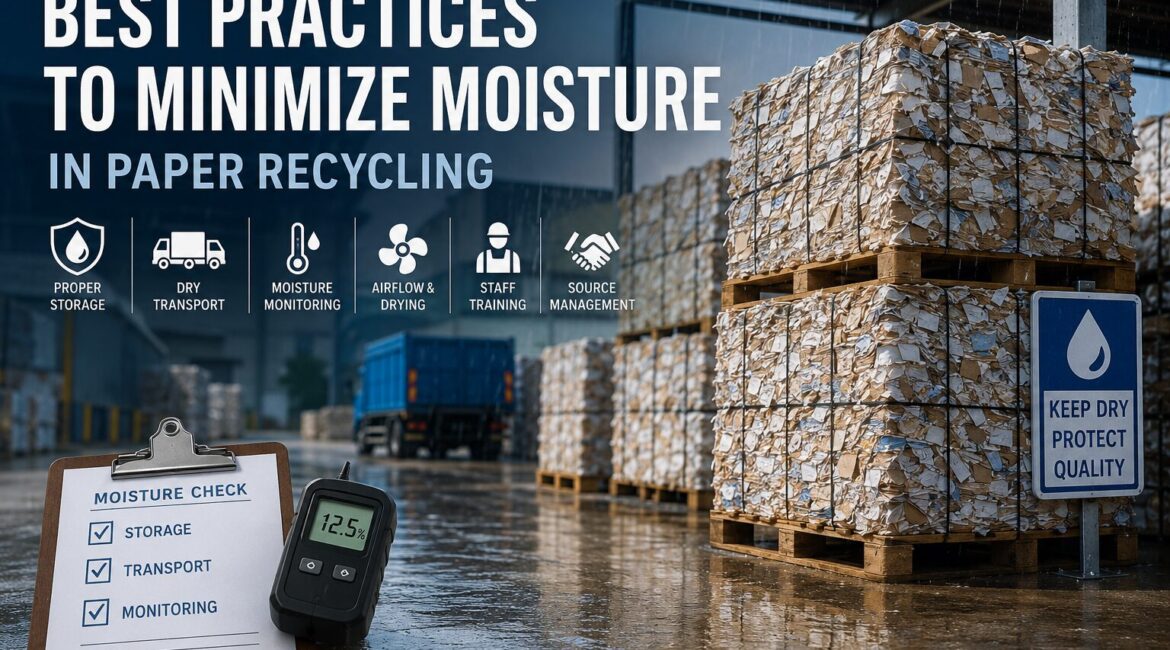
Moisture is one of the biggest challenges in the paper recycling industry. Excess moisture can reduce fibre quality, increase transportation costs, and lead to mould formation. Implementing effective moisture management practices helps protect material value and improve operational efficiency.
Key Strategies for Moisture Control
1. Proper Storage and Staging
Store bales on pallets or raised platforms to prevent contact with the floor. Maintain adequate spacing between bales to promote airflow and keep materials away from exterior walls where condensation may occur.
2. Collection and Transportation
Ensure trucks and containers are completely dry before loading. Use tarps or enclosed trailers to protect materials from rain and moisture exposure. Separating wetter grades from dry grades also helps prevent moisture transfer.
3. Moisture Monitoring
Regular inspections using moisture meters or sensor systems allow operators to identify high-moisture bales before processing. Monitoring multiple points within a bale stack improves consistency and quality control.
4. Controlled Drying and Airflow
Facilities handling long-term storage or wet materials should utilize ventilation systems, fans, and dehumidifiers to maintain appropriate moisture levels and reduce the risk of mould growth.
5. Employee Training
Staff should be trained to recognize moisture-related issues such as musty odours, damp bales, and warped edges. Proper handling and storage procedures play a critical role in moisture prevention.
6. Source Management
Work closely with suppliers and collection partners to encourage proper storage before pickup. Covered storage areas, dry transportation equipment, and careful source separation help reduce moisture before materials reach the recycling facility.
Why It Matters
Effective moisture management preserves fibre quality, minimizes contamination risks, improves bale performance, and helps maximize the value of recovered paper throughout the recycling supply chain.
