
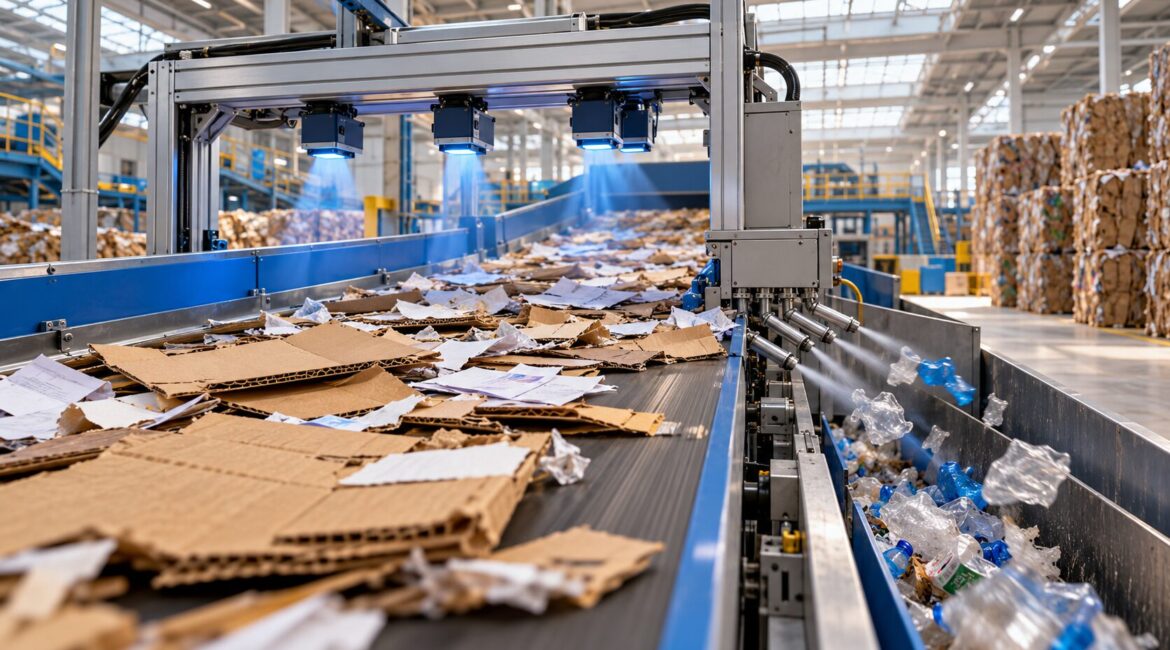
A recycling facility near Norwich, England, is recovering additional paper and cardboard from material previously destined for disposal following the installation of an AI sorting system.
Recycleye installed and commissioned its QuantiSort 2.0 unit over a single weekend at NEWS Recycling’s facility in Costessey. The plant, part of the Norse Group, sorts household recycling collected for the seven councils of the Norfolk Waste Partnership.
According to Recycleye, the system is delivering recovered paper and cardboard with 97% output purity. That figure describes the cleanliness of the recovered material, rather than the percentage of incoming waste recycled.
Recovering valuable material from the end of the line
Even after several sorting stages, recyclable paper and cardboard can remain mixed with residual waste. For operators, losing this material means missing potential sales while also paying for its disposal.
NEWS Recycling wanted to recover more of that fibre without adding manual sorting or undertaking a lengthy reconstruction of its processing line.
The new unit was fitted over an existing conveyor at the end of the line, allowing it to work within the facility’s current layout.
Computer vision and targeted air jets
QuantiSort 2.0 combines AI computer vision with air jets. A camera system identifies individual objects moving along the conveyor, distinguishing paper and cardboard from plastics, metals and other unwanted materials.
The air jets eject contaminants, while the paper and cardboard continue into the recovered material stream. Recycleye says targeting unwanted items helps limit compressed-air use and avoids ejecting valuable fibre.
Four live camera feeds also allow plant staff and Recycleye’s team to monitor the sorting process remotely.
Installation completed without losing production days
Engineers fitted the vision equipment and air-jet system, connected the controls, calibrated the unit and brought it into operation during one weekend.
According to Recycleye, the installation required no extended shutdown or changes to the surrounding processing line, and the plant lost no production days.
For recycling businesses, the potential benefit is twofold: more paper and cardboard available for sale, and less residual material requiring paid disposal. The Norwich installation demonstrates how an existing facility can add another recovery stage without replacing its entire sorting line.
The performance and installation figures were reported by Recycleye.
