
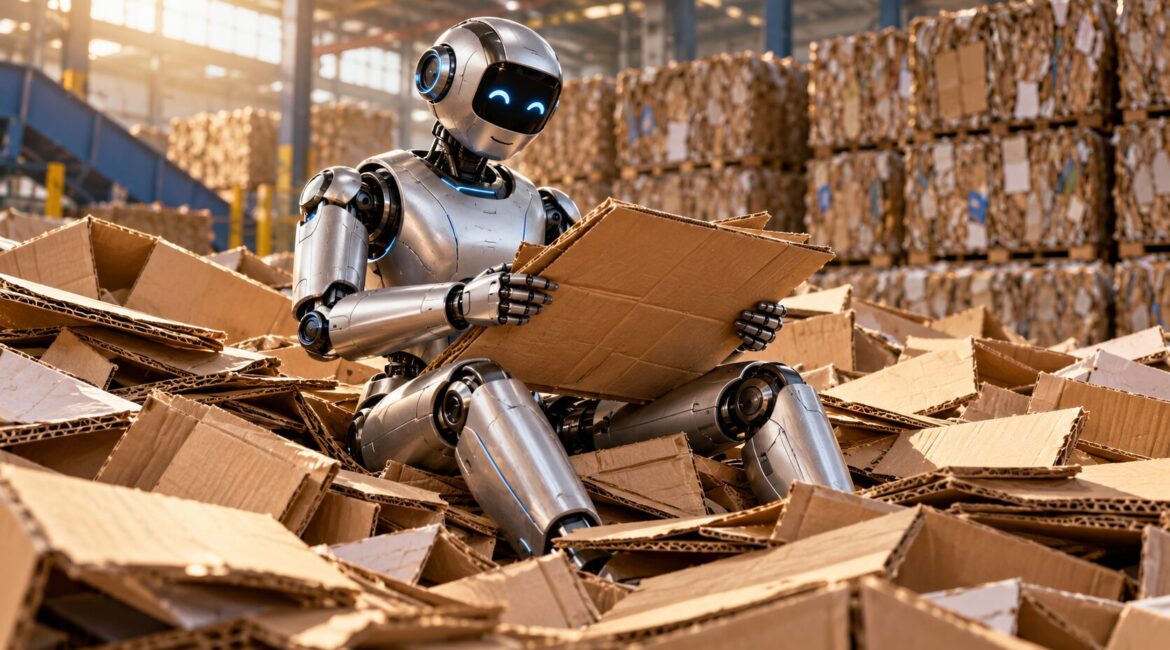
San Francisco-based recycling technology company Glacier says one of its AI-powered sorting robots is recovering more than 250 pounds of used corrugated cardboard per hour. Over an eight-hour shift, that adds up to more than 2,000 pounds—approximately 907 kilograms—of material available for recycling.
The results, shared in an August 14 company blog post, highlight an opportunity for recycling facilities to capture more valuable cardboard before it passes through their sorting systems.
Why cardboard is difficult to sort
Cardboard presents different challenges from bottles and cans. Paper-sorting conveyors are often wide, materials overlap, and large flattened boxes can hide smaller objects underneath. The volume and depth of material also change as waste moves along the belt.
Glacier’s system uses artificial intelligence to identify corrugated cardboard, newspapers, office paper and other recyclable materials. Its robotic equipment separates selected items from the stream, helping facilities recover useful material and improve sorting quality.
After sorting, recovered cardboard can be compressed into bales and transported to paper mills, where it is processed into material for new paper and packaging products.
Results from other installations
Glacier also reports that its robots helped improve paper purity by 17% at a recycling facility in California. According to the company, that installation achieved 95% uptime and an eight-month payback period.
Separately, Glacier says its technology has been installed on a paper-sorting line at Penn Waste to improve the recovery of cardboard and PET plastic.
These examples refer to different installations. The company has not identified the location of the robot recovering more than 900 kilograms of cardboard per shift.
More value from discarded boxes
For recycling operators, recovering additional cardboard means capturing material that can be sold rather than lost from the recycling stream. Cleaner sorted material also helps meet the requirements of paper mills purchasing recovered fibre.
Glacier’s reported results illustrate how automation could support that process, although performance and financial returns will depend on each facility’s operating conditions. The figures were provided by the manufacturer.
